
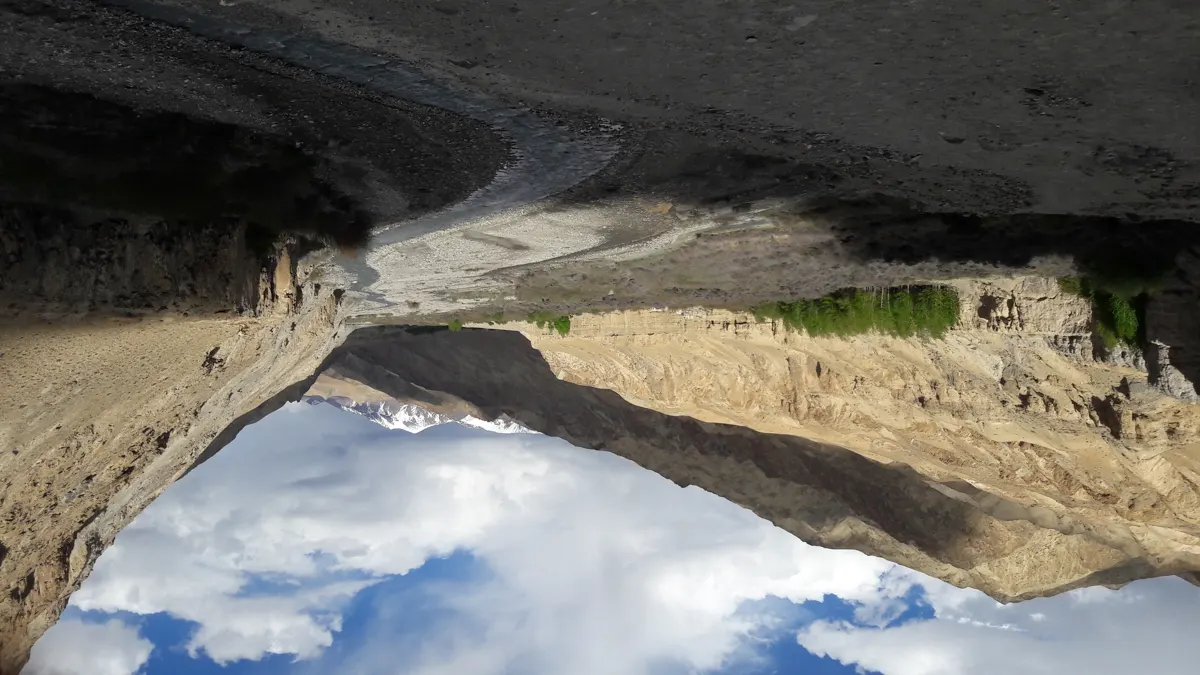
Ksuryawanshi — CC BY-SA 3.0. Wikimedia Commons source
Route at a glance
Altitude and duration are approximate and vary with the chosen approach. Confirm local conditions before travel.
- Region
- Zanskar, Ladakh
- Max Altitude
- 16,700 ft (Shingo La)
- Duration
- 8–12 days
- Difficulty
- Difficult
- Best Season
- July–September
- Base
- Darcha (Lahaul)
Into Zanskar the Old Way
For decades this was the great walk into Zanskar: over Shingo La from Lahaul, down the Kargyak river past fortress-like villages, to the astonishing cave monastery of Phuktal and on to Padum. It remains one of the Himalaya's grandest cultural traverses.
The Route and the Road
Darcha → Zanskar Sumdo → Shingo La (16,700 ft) → Kargyak → Purne, with the essential side trip to Phuktal Gompa → Padum. Note: the new Zanskar roads have replaced sections of the old trail, so modern itineraries mix walking stages with short drives — a good operator designs around this honestly rather than pretending the road isn't there.
Best Time and Difficulty
July–September. Difficult by length and altitude rather than technicality: many days above 12,000 ft and a serious pass. Phuktal alone justifies the journey.
Important route review
Older descriptions can differ from the route available today. Confirm the exact walking alignment, permitted camping locations and present access before relying on this guide. Road development, conservation rules and high-mountain conditions may change the practical journey.
What to consider when planning
Start with the approach and the overnight elevations, rather than only the highest point. Darcha Padum Trek should be assessed against your previous walking experience, available time and the conditions expected on the route. Check the return journey as carefully as the outward approach. The route outline above describes the landscape; it is not a navigation plan or a fixed day-by-day schedule.
Preparation and responsible travel
Build walking endurance before the trip and carry layers suited to changing mountain weather. Plan with experienced local support where the terrain requires it. Keep a conservative margin for delays and changing conditions. Stay on established paths, carry litter out and respect village customs. Avoid entering lakes or leaving offerings that become waste; mountain water sources and meadows are fragile.
Access and local checks
Confirm the current approach, trail status and any forest, protected-area or local entry requirements with the relevant authority before travel. Seasonal windows describe typical conditions, not a guarantee that the route is open. Road changes, snow, river levels and local restrictions can alter the journey. For remote crossings and glacier terrain, obtain an up-to-date assessment from qualified local professionals.
Frequently asked questions
Is this guide a day-by-day itinerary?
No. It introduces the route and its character. Exact stages should reflect current trail conditions, available overnight stops and the needs of the walking group.
How should I choose the season?
Use the season notes as a starting point, then check recent local conditions. A calendar window does not confirm safe snow, clear rivers or an open approach.
What makes this trek distinctive?
For decades this was the great walk into Zanskar: over Shingo La from Lahaul, down the Kargyak river past fortress-like villages, to the astonishing cave monastery of Phuktal and on to Padum. It remains one of the Himalaya's grandest cultural traverses.
Where can I confirm practical details?
Consult the relevant regional tourism resources and local authorities, then check the route with an experienced local professional. Confirm access and transport before fixing dates.