
In a limestone cave at 3,888 m in the Kashmir Himalaya, an ice lingam forms each summer from roof-drip — waxing and waning, tradition says, with the moon. This is Amarnath, where Shiva is believed to have told Parvati the secret of immortality (the amar katha), and each July–August lakhs of yatris cross high passes to stand before the frozen lord with the twin ice forms of Parvati and Ganesha beside him.

The Amarnath cave. Photo via Wikimedia Commons (see file page for license and attribution)
The Two Routes
The classic Pahalgam route (~46 km, 3–5 days) walks the storied path via Chandanwari, Sheshnag lake and the Mahagunas pass — the pilgrimage in full. The Baltal route (~14 km, 1–2 days) is the steep express option from Sonamarg side. Ponies, palkis and helicopter services (to Panjtarni) operate on both; camps and langars line the way in season.

Cave Temple of Lord Amarnath. Photo: Gktambe at English Wikipedia, Wikimedia Commons, Public domain
Registration and the Window
The yatra runs a fixed ~45–60 day window (roughly late June/July to Raksha Bandhan in August), administered by the Shri Amarnathji Shrine Board: advance registration with a compulsory health certificate is mandatory, with daily quotas per route. Rules, dates and security arrangements change year to year — verify everything on the Board's official channels before booking travel.
Preparation
Altitude, cold rain and long days are the real tests: train with hill walks, pack full wet-weather layers, and acclimatise at Pahalgam or Sonamarg. Respect the Board's advisories absolutely — this yatra runs on discipline.
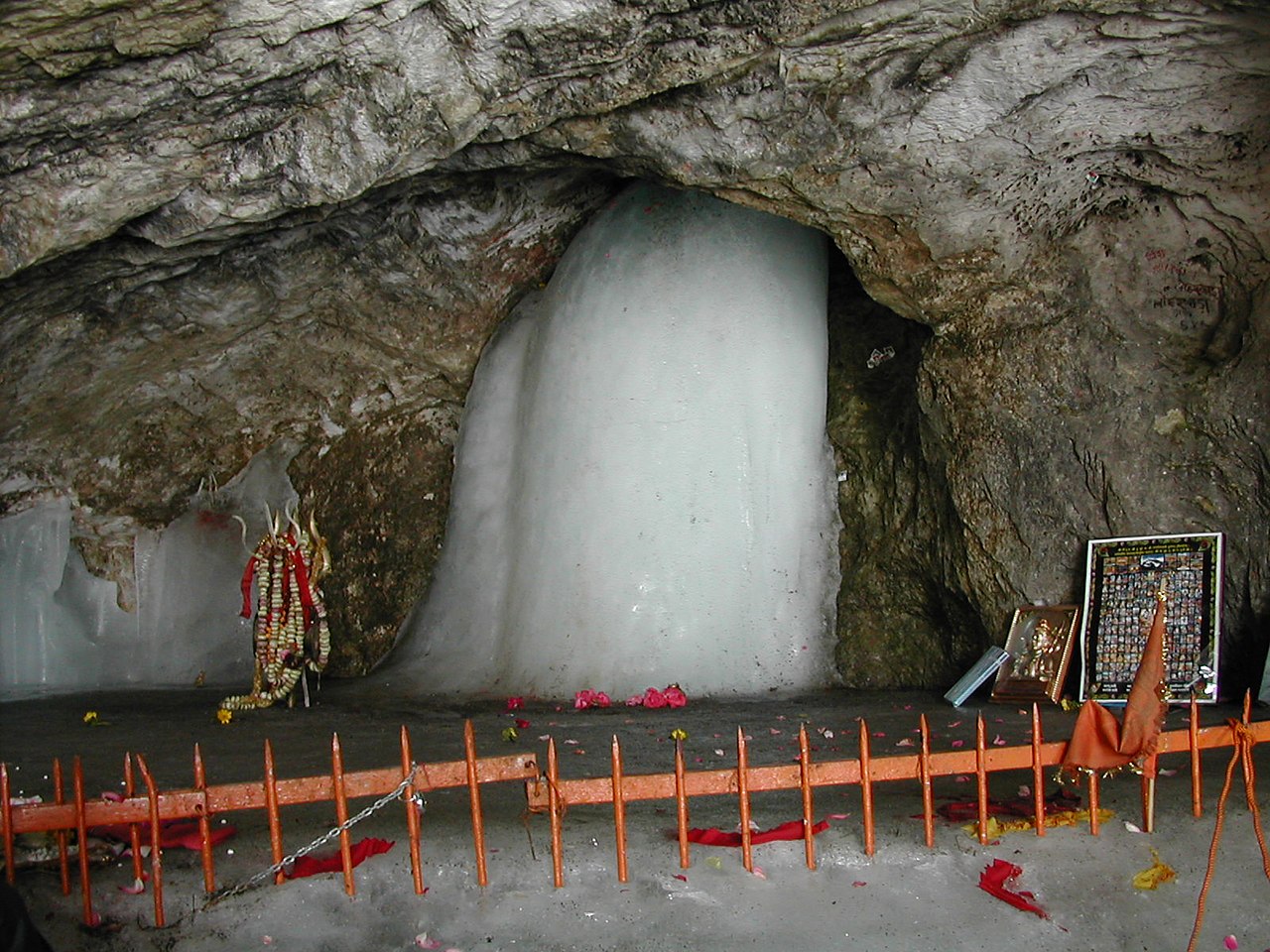
Lord Amarnath. Photo: Gktambe at English Wikipedia, Wikimedia Commons, Public domain
Pair It With
Kashmir's own sacred circuit — Kheer Bhawani, Shankaracharya hill, Martand's sun-temple ruins — fills the days around the yatra. And when the ice lingam has called you once, the other great Shiva journeys — Kedarnath, Adi Kailash, Manimahesh — are all waiting in our temple journeys.
Planning Amarnath?
Registration windows, route choice and acclimatisation decide this yatra. We help you plan it right, end to end.
Explore Himalayan Temples