
Of the five Panch Kedar shrines, Rudranath asks the most and gives the most. There is no road, no pilgrim highway, no tea-stall economy — just a long walk through some of Garhwal's finest forest and meadow country to a small stone temple at about 3,600 m where the mukh (face) of Lord Shiva is worshipped. The Pandavas, the story goes, found Shiva's face here after he dissolved into the earth at Guptkashi. What pilgrims find today is the loneliest and most beautiful of the five Kedars.

The Rudranath shrine. Photo: Cvashisth, Wikimedia Commons, CC BY-SA 3.0
The Route: Sagar Village to Rudranath
The most used trail starts at Sagar village near Gopeshwar (Chamoli district) and runs roughly 20 km one way. It climbs steeply out of the village into oak and rhododendron forest, then breaks out onto a chain of high meadows — Pung Bugyal, Lyuti Bugyal and the vast Panar Bugyal at about 3,300 m, the usual overnight halt. From Panar, the trail contours over the Pitradhar ridge, where trekkers make offerings to their ancestors, before dropping to the temple. Most parties take 2 days up, 1 day down; fit trekkers push it in a long day each way. An alternative route comes in from the Urgam valley via Dumak, letting you link Rudranath directly with Kalpeshwar.
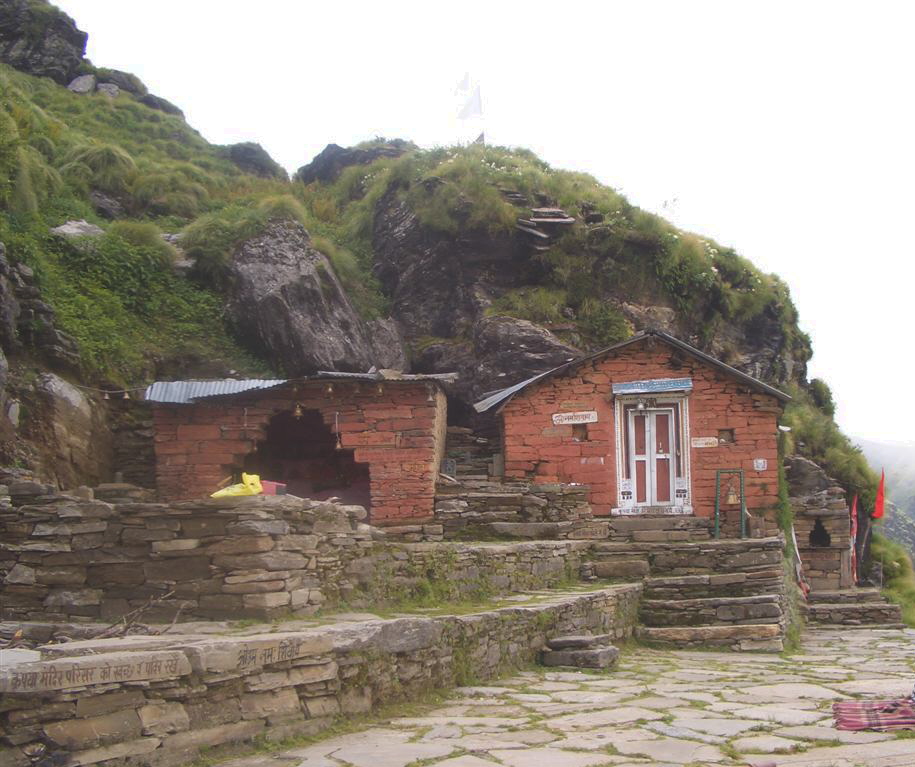
Rudranath temple. Photo: rolling on, Wikimedia Commons, CC BY-SA 2.0
How Hard Is It?
This is a genuine trek, graded moderate to difficult — around 2,100 m of cumulative ascent from Sagar, sustained steep sections, and weather that can turn fast on the exposed bugyals. Hire a local guide (easily arranged in Sagar or through us), carry your own rain and warm gear, and don't rely on trail-side supplies: beyond Panar there are only a couple of seasonal chatti huts.
Best Time for the Rudranath Trek
The temple opens with the other Kedars around May and closes around Diwali, when the doli descends to Gopeshwar for winter. May–June brings flowering rhododendrons low and snow patches high; September–October is the prize window, when the bugyals glow gold and Nanda Devi, Trishul and Nanda Ghunti line the horizon in crystal air. Avoid the monsoon: the meadows turn to bog and leeches own the forest.

Rudranath view. Photo: Cvashisth, Wikimedia Commons, CC BY-SA 3.0
At the Temple
The shrine itself is humble — a natural rock face worshipped as Shiva's, sheltered by a small stone structure. Just below sit the Narada Kund and Surya Kund pools where pilgrims bathe before darshan, and the Vaitarani stream, where rituals for departed souls are performed. Sunrise from the temple ridge, with the Nanda Devi group burning orange across the valley, is worth every step of the climb.
Practical Tips
Camp or book the basic pilgrim huts at Panar in season; carry a sleeping bag regardless. Water is scarce on the ridge sections — fill up at every source. Mobile network disappears above Sagar, so leave your plan with someone. And budget a rest day after: legs remember Rudranath.
Completing the Panch Kedar
Pair Rudranath with Kalpeshwar via the Urgam valley for the two remotest Kedars in one push, then finish with Tungnath, Madhyamaheshwar and Kedarnath. Our team plans the full circuit with guides and homestays throughout.
Ready for the Toughest Kedar?
Rudranath rewards effort like no other shrine in Garhwal. We arrange guides, porters and village homestays for the full circuit.
Explore Himalayan Temples