
On the ghats of the Bagmati in eastern Kathmandu stands the temple the whole Shaiva world bows toward: Pashupatinath, seat of Shiva as Pashupati, lord of all living beings, and Nepal's holiest shrine. The gilded two-tier pagoda with its silver doors shelters a four-faced lingam of extraordinary sanctity; around it spreads a UNESCO-listed sacred city of 500-odd shrines, sadhu shelters and burning ghats where the cycle of life completes in open view.

Pashupatinath. Photo via Wikimedia Commons (see file page for license and attribution)
Darshan — What to Know
The main sanctum admits Hindus only; carry ID (Indian citizens pass freely). The four sanctum doors open for morning and evening darshan with a midday break — queues are long on Mondays, Shravan and Shivratri, when lakhs arrive. Non-Hindu companions view the complex superbly from the east-bank terraces across the Bagmati.

Sadu Kathmandu Pashupatinath 2006 Luca Galuzzi. Photo: Luca Galuzzi (Lucag), Wikimedia Commons, CC BY-SA 2.5
The Evening Aarti
At dusk the Bagmati aarti — three priests, fire, conch and chorus on the ghats — has become one of the subcontinent's great devotional spectacles, gentler and closer-up than Varanasi's. Arrive by 5:30 pm for a riverside seat. Remember these are working cremation ghats: photograph the ceremony, never the pyres' mourners.
Best Time to Visit
October–April for clear Kathmandu weather; Maha Shivratri (February–March) for the immense mela with its ash-clad naga sadhus, if you're crowd-proof. The complex opens ~4 am to 9 pm daily.
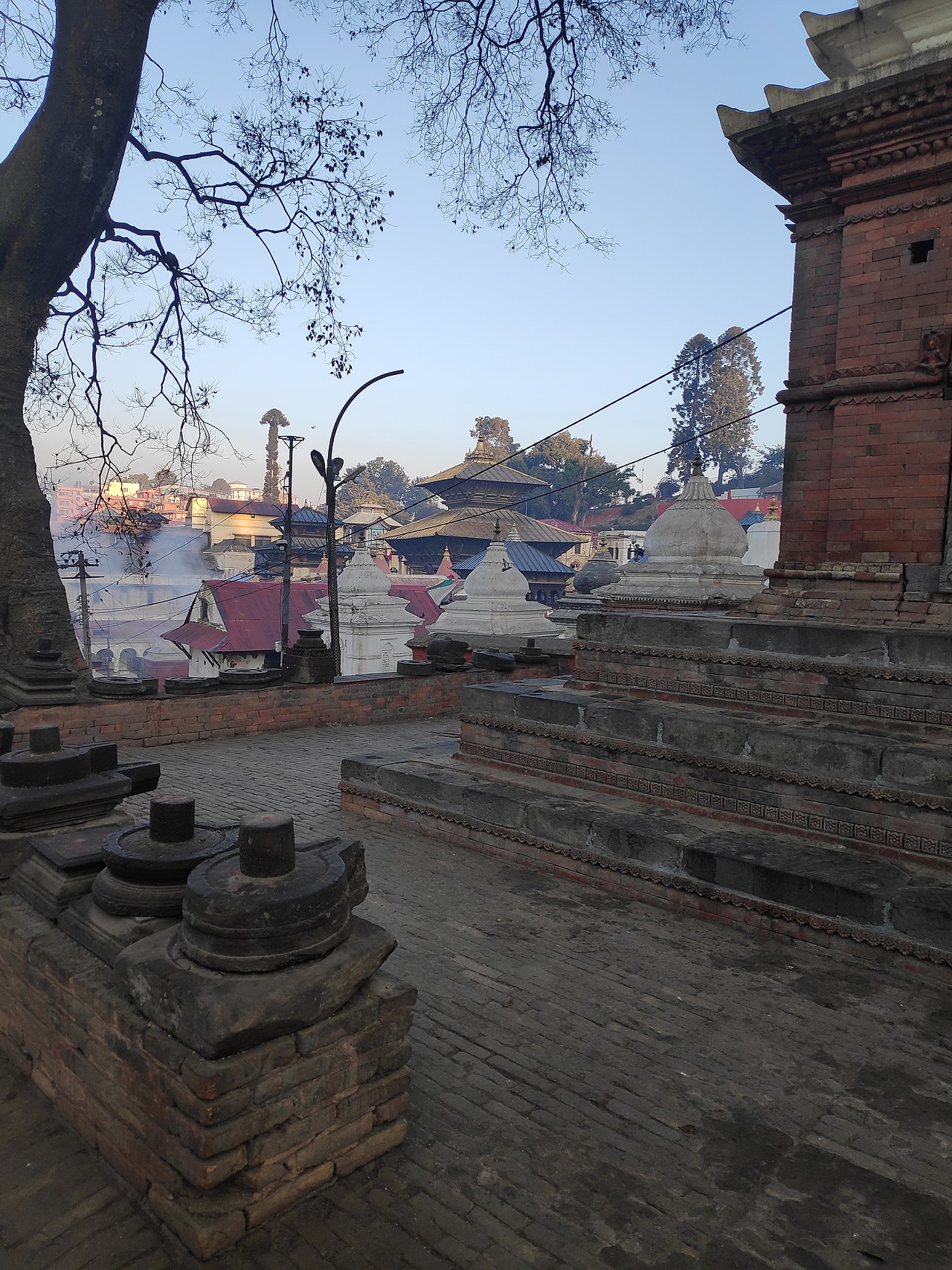
Pashupatinath Temple 2. Photo: Gaurav Dhwaj Khadka, Wikimedia Commons, CC BY-SA 4.0
Pair It With
Pashupatinath and Muktinath form the classic Nepal yatra pair; add Kathmandu's Boudhanath and Budhanilkantha with a spare day. The full Indo-Nepal route lives among our Himalayan temple journeys.
Adding Kathmandu to Your Yatra?
Pashupatinath pairs with Muktinath on every Indo-Nepal circuit we run — darshan, aarti seats and stays arranged.
Explore Himalayan Temples