
At the confluence of the Saryu and Gomati rivers — a sangam the Puranas praise as equal to Prayag — stands Bagnath, the temple that gives Bageshwar its name. Here, legend says, Shiva wandered as a tiger (vyaghra) to test the sage Markandeya; the current stone temple was raised in 1450 by the Chand king Lakshmi Chand on a site worshipped for a thousand years before that.
The Temple and the Sangam
The shrine's curvilinear shikhara rises directly above the bathing ghats, hung with bells and packed with medieval sculpture — much of it gathered from the valley and set into the walls. Morning brings ritual bathers to the sangam; evening aarti, with lamps floating off downstream, is small-town Kumaon at its most timeless.
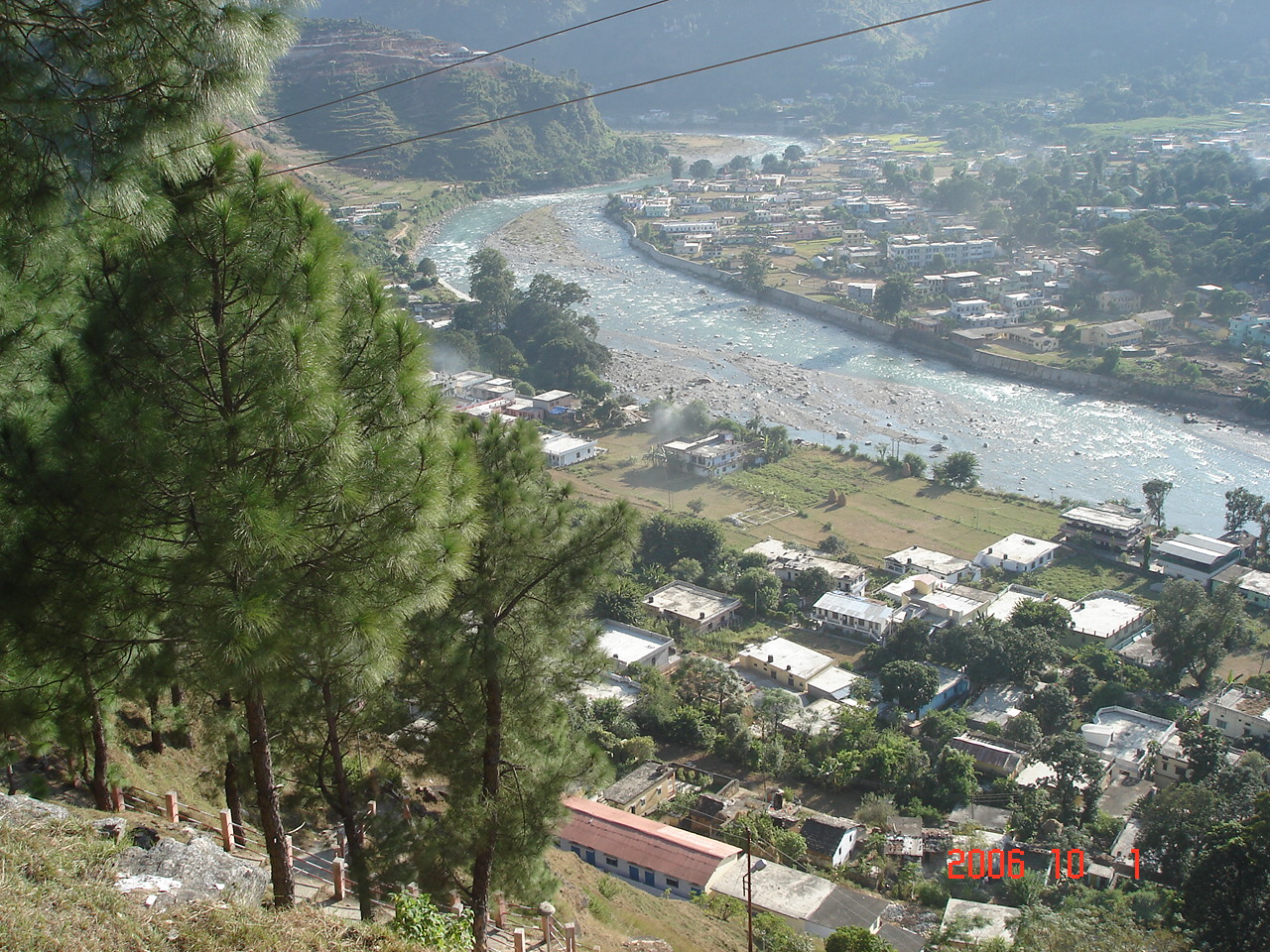
Bageshwar. Photo: en:User:Chawlaharmeet, Wikimedia Commons, Public domain
The Uttarayani Mela
Bagnath's great moment is Makar Sankranti (14 January), when the Uttarayani fair — Kumaon's largest winter gathering — fills the town for a week with traders, jagar singers and pilgrims bathing at the freezing sangam. It has been the region's news-and-marriage market for centuries; come once and you'll understand Kumaon better forever.
How to Reach
Bageshwar sits at a crossroads: 26 km from Baijnath, 41 km from Kausani, ~150 km from Pithoragarh, with the Pindari and Sunderdhunga trek roads starting nearby. The temple is in the heart of the bazaar.

Bagnath Temple at Bageshwar Uttrakhand - panoramio. Photo: pramod nagher, Wikimedia Commons, CC BY 3.0
Pair It With
Baijnath upstream, Chaukori's Panchachuli views eastward, and our home shrines of Patal Bhuvaneshwar and Haat Kalika beyond — Bagnath is the hinge of any full Kumaon temple circuit.

Bagnath Bageshwar . Photo: ArmouredCyborg, Wikimedia Commons, CC BY-SA 4.0
Passing Through Bageshwar?
Bagnath anchors the road between Kausani, the Pindari treks and our Pithoragarh country — we time the sangam aarti into every route.
Explore Himalayan Temples